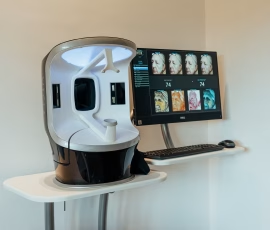
The VISIA 3D Face Scanner is a state-of-the-art imaging system designed to provide a comprehensive, in-depth analysis of your skin’s health. Developed by Canfield Scientific, a leader in imaging systems for dermatology and skincare, VISIA utilises advanced cameras, specialised lighting systems, and powerful software to capture and analyse detailed images of your skin.
Understanding Your Skin Analysis
VISIA skin analysis provides a comprehensive digital assessment of your complexion. By using multi-spectral photography, this technology captures high-resolution images of your face from three different angles to look both at the surface and into the deeper layers of the dermis. This non-invasive process allows your practitioner to see exactly what is happening with your skin health, identifying issues that are often invisible to the naked eye under normal lighting conditions.
What The Scan Measures
To achieve the most accurate and consistent results, you should arrive for your session with a completely clean face free from makeup, sunscreens, or heavy moisturisers. It is often recommended to wash your face at least one hour before the scan to allow your skin’s natural oils to stabilise, which prevents false readings of texture or pore size. You should also be prepared to remove any facial jewellery and use a headband to ensure your hair is pulled back entirely from your forehead and cheeks for an unobstructed view.
Reviewing Results and Tracking Over Time
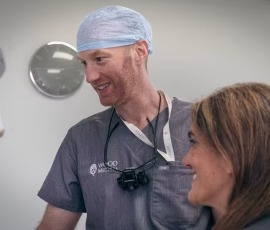
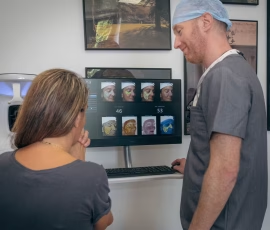
Once the images are captured, you will review a detailed visual report with your specialist to identify specific areas for improvement. This data serves as a baseline for your skincare journey, allowing you to move away from guesswork and toward a scientifically backed treatment plan. Because the system stores your images in a secure profile, you can return for follow-up scans in several months to see objective, side-by-side evidence of how your products and clinical treatments are transforming your skin over time.


Is Skin Scanning for You?
Any of our patients can benefit from skin scanning to complement other procedures. It is particularly beneficial to patients attending our dermatology clinics. Your clinician will advise you if this is an option as part of your treatment. Visia Scans can also be booked as a sole procedure.
Skincare Enthusiasts and Newcomers
The VISIA scan is an ideal starting point for anyone looking to move away from generic skincare routines and toward a bespoke approach guided by a dermatologist. By revealing the skin’s true needs (such as actual hydration levels, pore congestion, and hidden sun damage) it helps individuals invest in products that will yield genuine results. For those just beginning their skincare journey, the scan removes the expensive guesswork of trial and error by providing a scientific baseline of their current skin health.
Patients Managing Chronic Skin Conditions
Individuals dealing with persistent issues like acne, rosacea, or melasma find significant value in the detailed mapping provided by the imaging system. The scan identifies underlying inflammation and bacterial activity that might not be visible on the surface, allowing for a more targeted medical or aesthetic intervention. By seeing the exact distribution of redness and pigment, patients and their practitioners can better understand the triggers and progression of these specific conditions.
Individuals Focused on Anti-Ageing and Prevention
For those concerned with the long-term effects of sun exposure and natural ageing, the scan acts as an early warning system. It detects sub-surface UV spots and emerging fine lines years before they become permanent fixtures on the face, enabling the use of preventative treatments like high-grade antioxidants or laser therapies. The ability to calculate a biological skin age also provides a powerful motivational tool for those committed to maintaining a youthful complexion through proactive care.
Results-Driven Aesthetic Patients
People undergoing professional clinical treatments such as chemical peels, microneedling, or injectables benefit from the objective tracking the system provides. Because it stores high-resolution data from every visit, patients can see side-by-side evidence of their progress that goes beyond what they see in a bathroom mirror. This is particularly beneficial for those investing in a series of treatments who want to ensure their skin texture, volume, and clarity are improving at a cellular level.
Informing Effective Dermatological Treatments
The following treatments are often recommended by practitioners based on specific results from a VISIA skin scan.
Surface Texture and Hydration Enhancements
When a scan identifies issues with skin texture, enlarged pores, or surface congestion, clinicians frequently suggest options to deeply cleanse and hydrate the skin. For more persistent textural irregularities or dullness, chemical peels are a common choice to promote cell turnover and reveal a smoother surface. These treatments are often paired with medical-grade skincare regimens that include professional exfoliants or hyaluronic acid-based products to treat any dehydration captured during the imaging process.
Pigmentation and Sun Damage Correction
If the multi-spectral imaging reveals deep-seated UV damage or brown spots that have not yet reached the surface, laser and light-based therapies are typically the primary recommendation. Intense Pulsed Light (IPL) or BBL photofacials are highly effective at targeting melanin to break up pigmentation and even out the overall skin tone. In cases where the scan shows more extensive sun damage or melasma, practitioners might suggest laser resurfacing treatments like the HALO laser or specific 532 nm laser therapies to achieve more comprehensive pigment reduction.
Structural Support and Anti-Ageing Interventions
For patients whose results show significant fine lines, wrinkles, or a biological skin age higher than their chronological age, collagen-stimulating treatments are a high priority. Microneedling and radiofrequency (RF) skin tightening are frequently recommended to improve elasticity and firm the skin from within. When the scan pinpoints specific furrows or loss of volume in the mid-face, aesthetic injectors can more accurately place Botox or dermal fillers like Juvederm to provide targeted rejuvenation based on the precise mapping provided by the VISIA report.
Vascular and Bacterial Management
The VISIA scan is uniquely capable of detecting porphyrins, which are bacterial signatures that indicate a higher risk for acne breakouts, leading to recommendations for LED light therapy or specialised oxygen facials. When the analysis highlights Red Areas such as broken capillaries or inflammation associated with rosacea, vascular lasers or light-based therapies are used to calm the skin and strengthen vessel walls. This data-driven approach allows for the selection of anti-inflammatory topical products that specifically target the underlying redness identified by the cross-polarized imaging.
Improve the Physiological Health and Protective Capabilities of Your Skin
While many of these treatments are sought out for their visual results, they often provide significant functional benefits to the skin.
Strengthening the Skin Barrier
Treatments such as medical-grade facials and targeted topical regimens do more than create a glow; they restore the acid mantle and optimise the skin’s barrier function. A healthy barrier is essential for retaining moisture and shielding the body from environmental pathogens, pollutants, and allergens. By addressing the dehydration or microscopic valleys identified in a scan, these treatments reduce the risk of trans-epidermal water loss and chronic sensitivity.
Disease Prevention and Early Intervention
Addressing sub-surface UV damage through laser or light-based therapies can have a proactive health benefit beyond removing spots. By clearing away damaged cells and stimulating healthy cell turnover, these procedures can sometimes help manage actinic keratosis (precancerous lesions) and reduce the cumulative burden of sun damage. Furthermore, treatments that target bacterial porphyrins function as a medical intervention to prevent painful inflammatory acne, which can lead to permanent physical scarring and secondary infections.
Improving Vascular and Lymphatic Health
Vascular treatments for redness and rosacea serve a functional purpose by shrinking dilated capillaries and reducing chronic inflammation. This helps to regulate blood flow to the facial tissues and prevents the progressive thickening of skin associated with advanced rosacea. Similarly, many clinical skin treatments involve a degree of lymphatic drainage, which helps the body efficiently remove metabolic waste and reduces the localised swelling or puffiness that can interfere with tissue health.
Restoring Structural Integrity
Procedures like microneedling and radiofrequency are designed to trigger a wound-healing response that produces new collagen and elastin. Functionally, this thickens the dermis, which naturally thins as we age, making the skin less prone to tearing, bruising, and injury. By reinforcing the structural framework of the skin, these treatments improve its resilience and ability to heal, ensuring that the body’s largest organ can continue to perform its primary role as a protective shield effectively.