A prevalent issue among individuals experiencing hair loss is hair shedding. The human hair cycle features a growth phase known as anagen, during which approximately 90% of hair follicles on the scalp thrive. However, various factors can escalate the number of shedding hairs, a condition identified as Telogen effluvium. This condition often follows stressful life events, medical illnesses, surgical procedures, medications, or other underlying issues, such as low iron levels. Effective management centers on addressing the root cause when identified. Even in cases where no specific cause is discerned, treatment strategies are implemented to promote robust hair growth.
How is hair loss treated?
The treatment for hair loss depends on the underlying cause. Some common treatment options include:
Topical Minoxidil
This vasodilator is applied directly to the scalp twice daily. It works by widening blood vessels and opening potassium channels, which allows more oxygen, blood, and nutrients to reach the follicles. This extends the “growth phase” (anagen) of the hair cycle and is available over-the-counter in 2% or 5% concentrations. More on Minoxidil
Low-Dose Oral Minoxidil
Originally used for blood pressure, low-dose oral tablets (off-label) are becoming a popular alternative for those who find topical versions irritating or inconvenient. It works systemically to stimulate hair follicles and is often prescribed by specialists for patients with androgenetic alopecia or telogen effluvium. More on Minoxidil
Finasteride
This prescription pill targets the root cause of male pattern baldness by inhibiting the enzyme 5-alpha reductase. This reduces the conversion of testosterone into Dihydrotestosterone (DHT), the hormone responsible for shrinking follicles. While highly effective for men, its use in women is strictly regulated and typically limited to post-menopausal cases.
Hair Transplant Surgery
A permanent surgical solution where a surgeon extracts healthy, DHT-resistant hair follicles from a “donor site” (usually the back of the head) and grafts them into thinning areas. Common techniques include FUE (Follicular Unit Extraction), which leaves tiny dot scars, and FUT (Follicular Unit Transplantation), which involves removing a strip of skin.
Low-level Laser Therapy (LLLT)
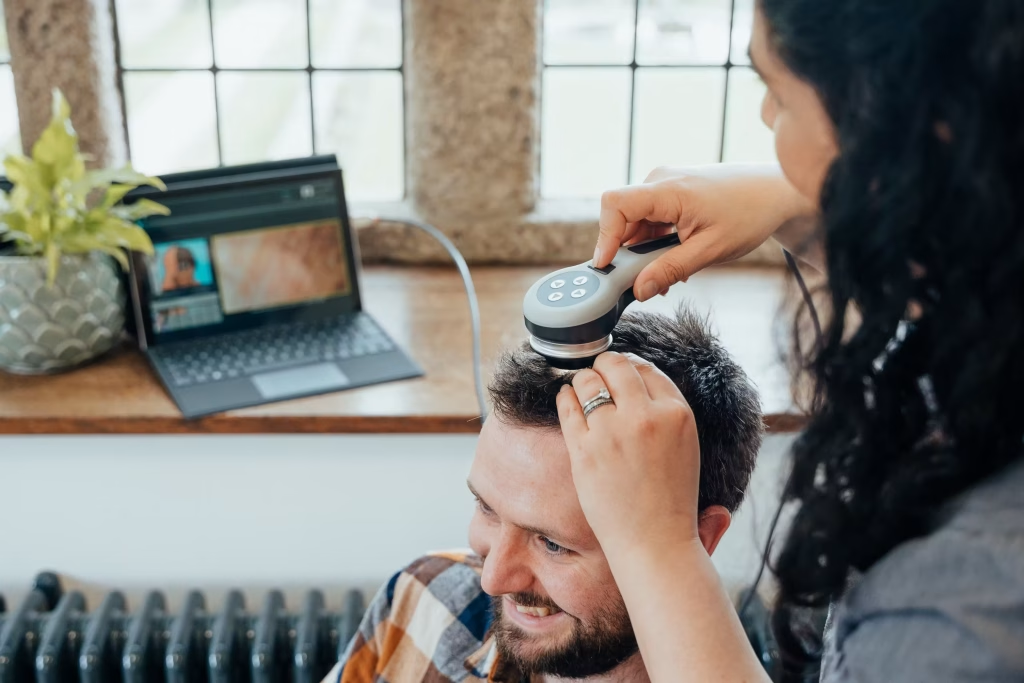
This non-invasive treatment uses medical-grade lasers or LEDs to deliver red light to the scalp. This photobiomodulation stimulates cellular activity and blood flow to weakened follicles. It is available as clinical in-office hoods or at-home devices like laser combs and helmets.
Platelet-rich Plasma (PRP) Therapy
A patient’s own blood is drawn, processed in a centrifuge to concentrate the platelets, and then injected into the scalp. These platelets release growth factors that repair damaged tissues, prolong the hair growth cycle, and increase hair shaft thickness.
Hormone Therapy
For women experiencing thinning due to menopause, PCOS, or androgen excess, doctors may prescribe hormone-balancing medications. Options include birth control pills, estrogen replacement therapy, or Spironolactone, which blocks the effects of androgens on the skin and hair.
Managing Underlying Medical Conditions
Hair loss is often a symptom rather than the primary disease. Addressing systemic issues, such as correcting an iron deficiency, stabilising thyroid hormones, or clearing a fungal scalp infection, can often stop the shedding and allow the hair to regrow naturally without specific hair treatments.
Hair Care and Styling Practices
Mechanical stress can lead to Traction Alopecia. Prevention involves avoiding tension styles like tight braids or ponytails. Additionally, reducing chemical processing (bleach/perms) and high-heat tools protects the hair shaft from breakage, ensuring that the hair you do have stays healthy and intact.
Cosmetic Camouflage
These solutions provide immediate visual improvement without affecting hair growth. Options range from keratin fiber sprays that cling to existing strands to create thickness, to Scalp Micropigmentation (SMP), which mimics the look of hair follicles via tattooing. High-quality wigs, hair systems (toupees), and toppers also offer a non-medical way to restore a full head of hair.
Minoxidil
How Does Topical Minoxidil Work?
Minoxidil is a medication that is commonly used to treat hair loss, particularly androgenetic alopecia (male or female pattern baldness). It is a topical solution that is applied directly to the scalp.
Minoxidil is thought to work by 1) increasing blood flow to the hair follicles by dilating the blood vessels supplying the hair follicle. This may help to deliver more nutrients and oxygen to the hair follicles, promoting hair growth 2) Lengthening the anagen (growth) phase of the hair cycle resulting in longer hair 3) Increasing the size of hair follicles allowing them to produce thicker, fuller hair.
Minoxidil is typically applied twice daily to the affected area of the scalp. It will take several months of consistent use before results are noticeable, and the medication must be used continuously to maintain any hair growth that occurs. Like any medication, minoxidil may have side effects, such as scalp irritation or itching, and it may not be effective for everyone with hair loss. It is important to talk to a healthcare provider before starting any hair loss treatment.
How Does Oral Minoxidil Work?
Oral minoxidil is a medication that is sometimes used to treat hair loss, although it is not as commonly prescribed as topical minoxidil. Unlike topical minoxidil, which is applied directly to the scalp, oral minoxidil is taken in tablet form. As oral minoxidil is taken systemically, it can have more widespread effects on the body than topical minoxidil. This means that it may be more effective for hair growth, but it may also have more side effects, such as low blood pressure, fluid retention, and hair growth in other areas of the body. For this reason, oral minoxidil is typically only prescribed for severe cases of hair loss that have not responded to other treatments. It is important to talk to a healthcare provider before starting any hair loss treatment, including oral minoxidil.
Stem Cells
How Does Stem Cell Treatment Help Hair Loss?
Stem cell therapy is a relatively new and promising treatment for hair loss. The idea behind stem cell therapy for hair loss is that stem cells can differentiate into various types of cells, including hair follicle cells, and may therefore help to regenerate hair follicles that have stopped producing hair.
There are several ways in which stem cell therapy may be used to treat hair loss, including:
Stem cell therapy for hair loss is in the early stages of research, and more studies are needed to determine its safety and effectiveness. However, early studies have shown promising results, with some patients experiencing increased hair growth and thickness after stem cell treatment. It is important to talk to a healthcare provider about the potential risks and benefits of stem cell therapy for hair loss.
Stem cell transplantation: This involves transplanting stem cells directly into the scalp to promote hair growth. The stem cells may be obtained from the patient’s own body, such as from adipose (fat) tissue or bone marrow, or from a donor.
Platelet-rich plasma (PRP) therapy: This involves using the patient’s own blood, which is processed to concentrate the platelets, which contain growth factors that may help to stimulate hair growth. The concentrated platelets are then injected into the scalp.
Growth factor therapy: This involves using growth factors, such as fibroblast growth factor (FGF) and vascular endothelial growth factor (VEGF), to stimulate hair growth. These growth factors may be delivered directly to the scalp through injection or applied topically.